In the fast-paced world of digital marketing, one term is quietly revolutionizing how businesses convert prospects: leads density. It’s not just about generating more leads—it’s about maximizing the quality and concentration of high-intent prospects in your pipeline. Welcome to the ultimate guide that unpacks everything you need to know.
What Is Leads Density and Why It Matters

Leads density is a critical yet often overlooked metric in modern marketing and sales strategies. Unlike traditional lead volume, which focuses solely on quantity, leads density measures the concentration of high-quality, conversion-ready prospects within a given audience or data set. This distinction is vital because not all leads are created equal.




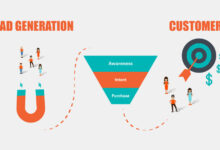
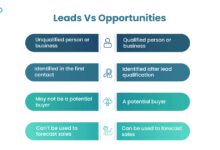
Defining Leads Density in Modern Marketing
Leads density refers to the proportion of qualified, high-intent leads within a total pool of potential prospects. It’s a measure of efficiency—how much of your audience is actually ready to engage, convert, or purchase. Think of it as the signal-to-noise ratio in your lead generation efforts.
- High leads density means more prospects are likely to convert with minimal nurturing.
- Low leads density indicates a diluted audience, requiring more resources to convert.
- It’s calculated as: (Number of Qualified Leads / Total Prospects) × 100.
This metric is especially crucial in B2B marketing, where sales cycles are longer and lead quality directly impacts ROI.
How Leads Density Differs from Lead Volume
Many marketers confuse leads density with lead volume. While lead volume counts the total number of leads generated, leads density evaluates their quality and readiness. For example, generating 10,000 leads might seem impressive, but if only 2% are qualified, your leads density is just 2%—a red flag for inefficiency.
“Quantity without quality is noise. Leads density turns noise into actionable insight.” — Marketing Analytics Journal, 2023
High lead volume with low leads density often results in wasted ad spend, bloated CRM databases, and overworked sales teams chasing unqualified leads.
The Science Behind Leads Density Optimization
Optimizing leads density isn’t guesswork—it’s rooted in data science, behavioral analytics, and conversion psychology. By understanding the factors that influence lead quality, businesses can fine-tune their acquisition strategies for maximum impact.
Data Quality and Segmentation Strategies
The foundation of high leads density is clean, accurate, and segmented data. Poor data quality—such as outdated emails, incorrect job titles, or incomplete profiles—dilutes your lead pool and reduces conversion potential.
- Use data enrichment tools like Clearbit to enhance lead profiles.
- Implement real-time validation during form submissions to reduce junk entries.
- Segment leads by firmographics, technographics, and behavioral intent for precision targeting.
According to a Gartner study, companies with advanced segmentation see up to 760% higher marketing ROI.
Behavioral Scoring and Intent Data
Behavioral scoring assigns values to leads based on their actions—website visits, content downloads, email opens, and demo requests. When combined with third-party intent data (e.g., from 6sense or Terminus), you can identify prospects actively researching solutions like yours.
- Leads visiting pricing pages or case studies show higher intent.
- Multiple visits from the same company IP suggest team-level interest.
- Intent data can increase leads density by identifying ‘in-market’ buyers.
This proactive approach shifts marketing from spray-and-pray to sniper-like precision.
Measuring Leads Density: Key Metrics and Tools
To improve what you can’t measure, you must first establish a reliable framework for tracking leads density. This involves both quantitative metrics and qualitative assessments.
Conversion Rate as a Proxy for Leads Density
While leads density isn’t a standard CRM metric, conversion rate from lead to opportunity is a strong proxy. A high conversion rate (e.g., 40%+) suggests a dense pool of qualified leads. Conversely, a low rate (e.g., below 10%) indicates poor leads density.
- Track lead-to-opportunity and lead-to-customer rates by source.
- Compare performance across channels: organic, paid, social, referrals.
- Use A/B testing to refine lead qualification criteria.
For example, if LinkedIn Ads yield a 35% conversion rate while Facebook Ads yield 8%, the former has higher leads density.
CRM and Marketing Automation Analytics
Platforms like HubSpot, Salesforce, and Marketo provide dashboards to analyze lead quality over time. Key features include:
- Lead scoring models that rank prospects based on engagement.
- Source attribution to identify high-density channels.
- Funnel drop-off analysis to pinpoint weak stages.
Regular audits of your CRM data ensure that your leads density metrics remain accurate and actionable.
Strategies to Increase Leads Density
Boosting leads density requires a strategic overhaul of your acquisition, nurturing, and qualification processes. It’s not about generating more leads—it’s about attracting the right ones.
Targeted Content Marketing for High-Intent Audiences
Content is a magnet for leads. But generic blog posts attract casual browsers. To increase leads density, create content tailored to high-intent buyer personas.
- Develop solution-specific guides, comparison sheets, and ROI calculators.
- Use SEO to target commercial intent keywords (e.g., ‘best CRM for small business’).
- Gate high-value content behind lead capture forms with smart qualification fields.
According to Content Marketing Institute, businesses using targeted content see a 2.5x increase in qualified leads.
Leveraging Account-Based Marketing (ABM)
ABM is the gold standard for maximizing leads density. Instead of casting a wide net, ABM focuses on a select list of high-value accounts.
- Identify target accounts using firmographic and technographic data.
- Deploy personalized campaigns across email, ads, and direct mail.
- Align sales and marketing teams to engage multiple stakeholders within each account.
A 2023 ABM Institute report found that companies using ABM report 73% higher leads density in their pipelines.
The Role of AI and Predictive Analytics in Leads Density
Artificial intelligence is transforming how businesses identify and prioritize high-quality leads. Predictive analytics uses historical data to forecast which prospects are most likely to convert.
Predictive Lead Scoring Models
Traditional lead scoring relies on static rules (e.g., job title + company size). Predictive scoring uses machine learning to analyze thousands of data points, including engagement patterns, website behavior, and external signals.
- Tools like InsideSales and PeopleData automate lead prioritization.
- Predictive models improve leads density by surfacing hidden high-potential leads.
- They reduce human bias in lead qualification.
Studies show predictive scoring can increase sales productivity by up to 30%.
AI-Powered Chatbots and Lead Qualification
Modern chatbots do more than answer FAQs—they qualify leads in real time. Using natural language processing (NLP), AI chatbots can assess intent, gather qualifying information, and route high-potential leads to sales.
- Deploy chatbots on landing pages and pricing sections.
- Program them to ask qualifying questions (e.g., ‘What’s your budget?’ or ‘When do you plan to implement?’).
- Integrate with CRM to auto-tag and score leads.
According to Drift, AI chatbots can increase qualified lead capture by 40%.
Common Pitfalls That Reduce Leads Density
Even well-intentioned strategies can backfire if they inadvertently dilute your lead pool. Recognizing these pitfalls is the first step to avoiding them.
Over-Reliance on Lead Magnets with Low Barriers
Offering free eBooks or webinars with minimal qualification can flood your database with low-intent leads. While this inflates lead volume, it tanks leads density.
- Require more than just an email—ask for job title, company size, or use case.
- Use progressive profiling to gather data over time.
- Focus on value exchange: high-effort offers attract high-intent users.
As HubSpot notes, ‘The easier it is to opt-in, the lower the lead quality.’
Poor Alignment Between Marketing and Sales
When marketing and sales teams operate in silos, leads density suffers. Marketing may pass unqualified leads, while sales complains about lead quality.
- Establish a shared Service Level Agreement (SLA) for lead handoff.
- Conduct regular feedback sessions to refine lead criteria.
- Use shared dashboards to track leads density and conversion metrics.
Companies with strong sales-marketing alignment achieve 36% higher leads density, per MarketingProfs.
Case Studies: Brands That Mastered Leads Density
Real-world examples demonstrate how leads density can transform business outcomes. Let’s examine two contrasting cases.
Case Study 1: SaaS Company Boosts Conversion by 200%
A mid-sized SaaS provider struggled with low conversion rates despite high lead volume. After analyzing their funnel, they discovered their leads density was below 5%.
- Implemented predictive lead scoring using Salesforce Einstein.
- Shifted content strategy to focus on high-intent keywords and gated tools.
- Adopted ABM for enterprise accounts.
Within six months, their leads density rose to 28%, and lead-to-customer conversion increased by 200%.
Case Study 2: E-commerce Brand Reduces CAC by 60%
An online retailer was spending heavily on Facebook Ads but saw diminishing returns. Their leads were numerous but rarely converted.
- Integrated intent data from 6sense to identify in-market shoppers.
- Retargeted high-intent users with personalized offers.
- Optimized landing pages for faster qualification.
Leads density improved from 8% to 34%, and customer acquisition cost (CAC) dropped by 60%.
Future Trends in Leads Density and Lead Intelligence
As technology evolves, so does the science of lead quality. The future of leads density lies in real-time intelligence, hyper-personalization, and ethical data use.
Real-Time Intent Monitoring
Next-gen platforms will monitor buyer intent in real time, updating leads density scores dynamically. Imagine knowing a prospect just read a competitor’s pricing page—your system could trigger an immediate outreach.
- Integration with intent data providers will become standard.
- AI will predict micro-moments of decision-making.
- Real-time alerts will enable instant engagement.
This shift will make leads density a live, evolving metric rather than a static report.
Privacy-First Lead Generation
With increasing regulations (GDPR, CCPA) and cookie deprecation, businesses must find new ways to maintain leads density without compromising privacy.
- Zero-party data (information willingly shared by users) will rise in importance.
- Contextual targeting will replace behavioral tracking in some channels.
- Transparency in data use will build trust and improve lead quality.
Brands that prioritize consent and value exchange will sustain high leads density in a post-cookie world.
What is the ideal leads density for a B2B company?
While it varies by industry, a leads density of 20-30% is considered strong for B2B. This means 20-30% of captured leads are sales-qualified. However, the benchmark depends on your sales cycle, product complexity, and market maturity.
Can leads density be too high?
Theoretically, yes. If leads density approaches 100%, it may indicate you’re targeting too narrowly, missing growth opportunities. The goal is balance—high quality without sacrificing scalability.
How often should I measure leads density?
Monthly measurement is recommended for most businesses. High-growth or sales-driven companies may benefit from weekly tracking to quickly adjust campaigns.
Does leads density affect customer lifetime value (LTV)?
Absolutely. Higher leads density correlates with better customer fit, leading to higher retention, upsell rates, and LTV. Poor-quality leads often churn quickly, dragging down overall profitability.
What tools can help improve leads density?
Top tools include HubSpot (lead scoring), 6sense (intent data), Clearbit (data enrichment), Drift (AI chatbots), and Salesforce (CRM analytics). Combining these creates a powerful leads density optimization stack.
Leads density is not just a metric—it’s a mindset. It shifts the focus from chasing volume to cultivating quality. By understanding, measuring, and optimizing leads density, businesses can achieve higher conversion rates, lower acquisition costs, and stronger customer relationships. The future of marketing belongs to those who prioritize precision over noise. Start refining your leads density today, and watch your pipeline transform from a trickle to a torrent of high-value opportunities.
Further Reading: